
Orcas, also known as killer whales, are the largest members of the dolphin family and one of the ocean's most intelligent apex predators. Highly social and deeply family-oriented, they travel in tight-knit pods, communicate using unique dialects, and pass down hunting techniques from one generation to the next. Found in every ocean on Earth, orcas are as adaptable as they are powerful — capable of taking down prey many times their size through teamwork and strategy rather than brute force alone.

A pod of orcas dives beneath a densely packed school of baitfish, working together to corner and feed on the swirling mass. This tight, ball-shaped formation is a defense response from the fish — schooling as densely as possible to confuse predators — but coordinated hunters like orcas use teamwork to break the group apart. Group feeding events like this highlight just how cooperative orca hunting really is, with each member playing a role in driving prey into a vulnerable position.
Seen from above, a line of orcas closes in on a seal resting on a small ice floe, their synchronized movement and trailing wakes visible in the dark polar water. This wave-washing behavior — where orcas swim together to create a swell that knocks prey off the ice — is a hunting technique documented mainly in Antarctic populations and considered one of the clearest examples of learned, cultural behavior passed between generations of orcas.

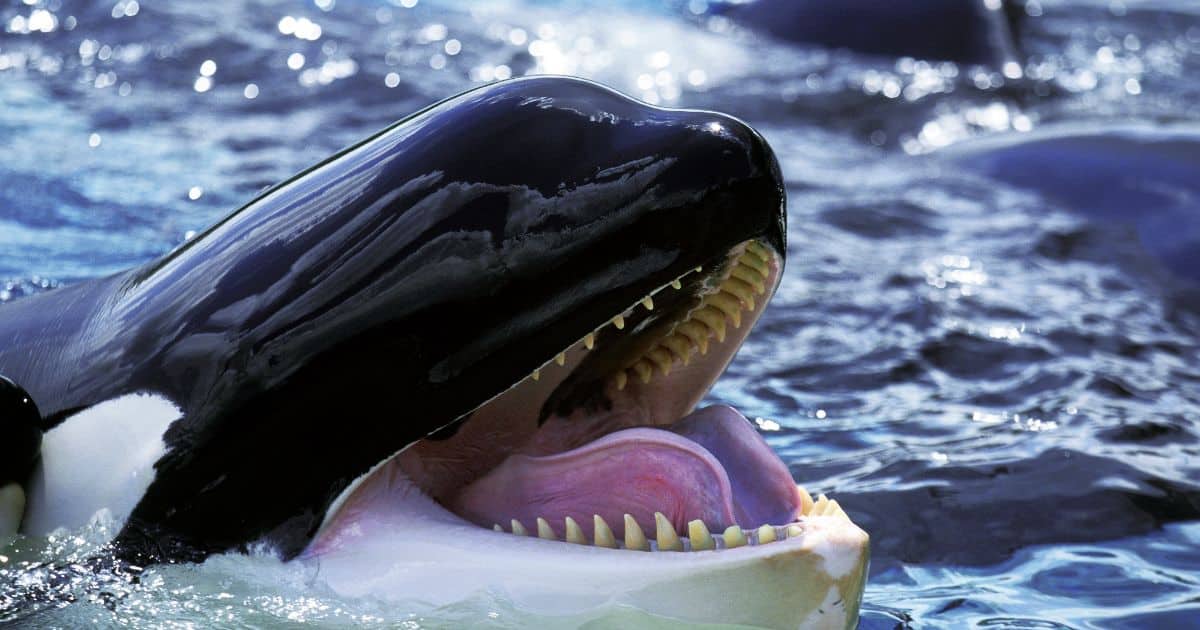
An orca surfaces with its mouth wide open, revealing rows of large, interlocking conical teeth built for gripping prey rather than chewing it. Orcas swallow smaller prey whole and tear larger prey into pieces, using their roughly 40–56 teeth to hold on rather than cut. This close-up view offers a rare, direct look at the anatomy that makes orcas such effective apex predators.